
Case study · example scenario
From folders and spreadsheets to one QMS in four weeks
How a manufacturing company with 60 employees could move its ISO 9001 management system into the QMS platform Kvaltix — week by week, with the modules it uses every day.
Example scenario. This case study is an example scenario based on the demo organization “Sample Company Ltd.” in the QMS platform Kvaltix, not a named customer. The company, people and data are fictitious; the screens are real screens of the platform with sample data. The effects are described qualitatively — we do not publish invented figures.
The starting point
Sample Company Ltd. machines and assembles metal parts for industrial customers: 60 employees, two production halls, one quality manager who also looks after occupational health and safety. The company has been certified to ISO 9001 for several years and is preparing for ISO 14001.
The system works, but it lives in many places: procedures in folders on a file server, the action list in a spreadsheet, training certificates in binders at HR, calibration dates in the quality manager’s calendar. Before every audit she spends days collecting evidence, and between audits nobody has an overview of what is overdue.
What hurt most
- Three versions of the same work instruction in circulation, and no proof of who had read the current one.
- Corrective actions that were opened but never checked for effectiveness.
- Training and calibration deadlines noticed only when they had already passed.
- An internal audit report that took days to type up after the audit itself.
Four weeks of implementation
- Week 1
Structure and documents
The organizational structure and users are set up, production workers without e-mail are added as people without an account. Procedures and instructions are uploaded with one valid version each; approval follows the heads of departments, and acknowledgement of the key instructions is requested.
- Week 2
Actions, complaints and risks
Open actions are moved from the spreadsheet into the Actions module with an owner, a deadline and an effectiveness criterion. New complaints are recorded in the complaint register from the first day. The risk register is rebuilt in the 5×5 matrix with owners and review dates.
- Week 3
Equipment and competence
Measuring and work equipment goes into the equipment register with its calibration and inspection dates; machines get QR labels for reporting breakdowns. The training catalog and the requirements by department fill the competence matrix.
- Week 4
Audit and management review
The first internal audit is planned in the annual audit program and carried out with the questionnaire and findings with photos. The management review draws its inputs from the modules, and an info screen in the hall shows the indicators against their targets.
What it looks like in the platform
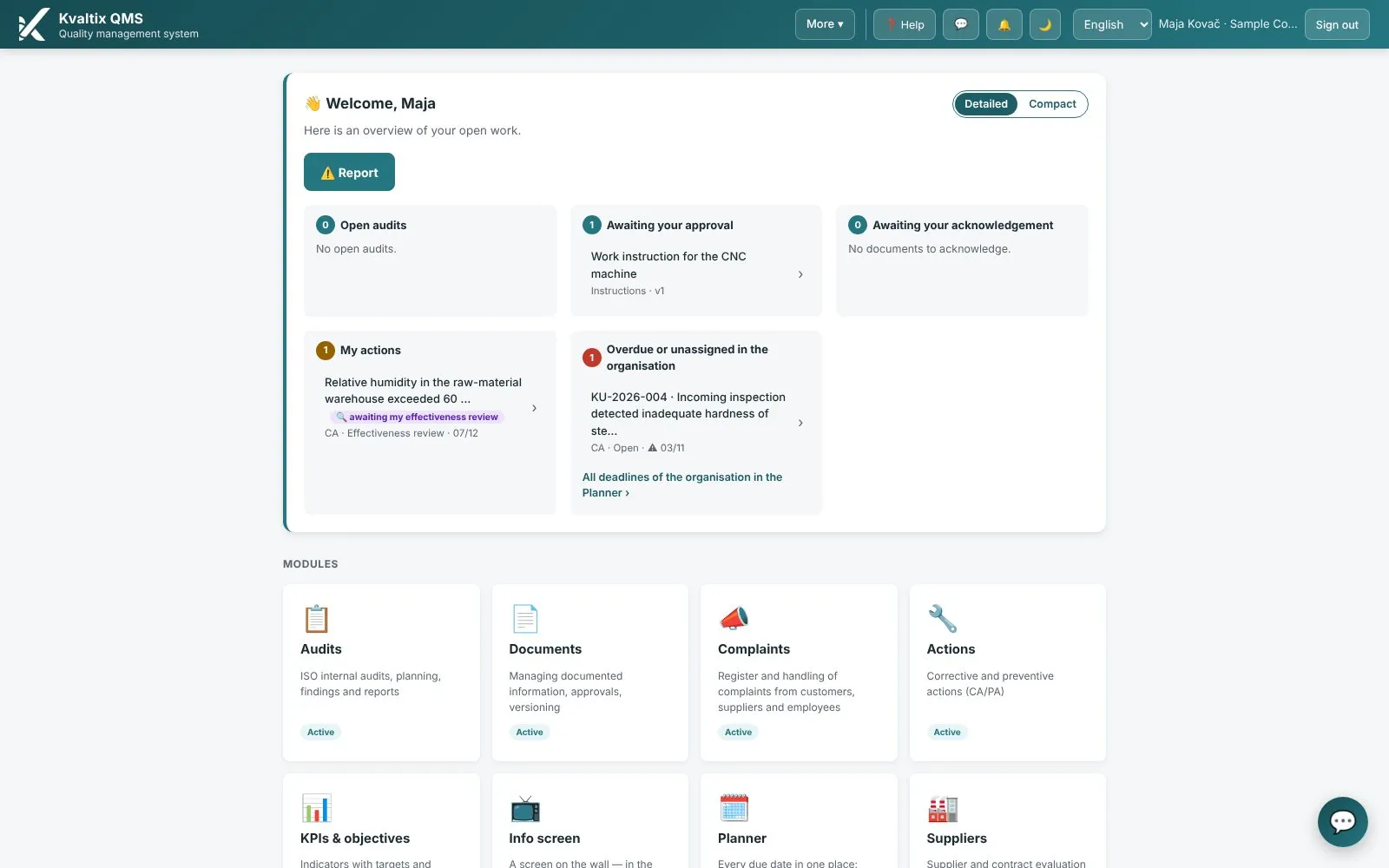
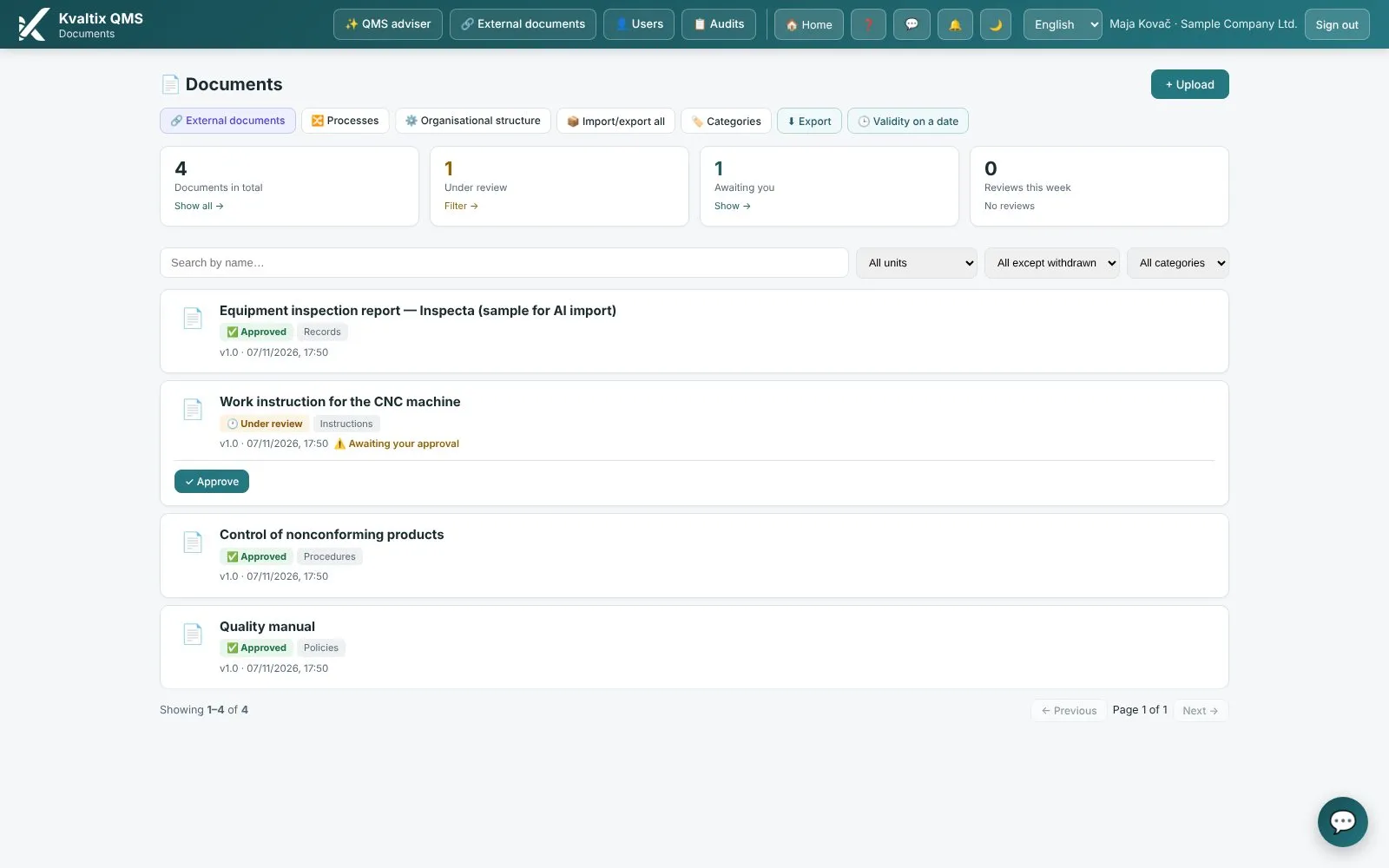
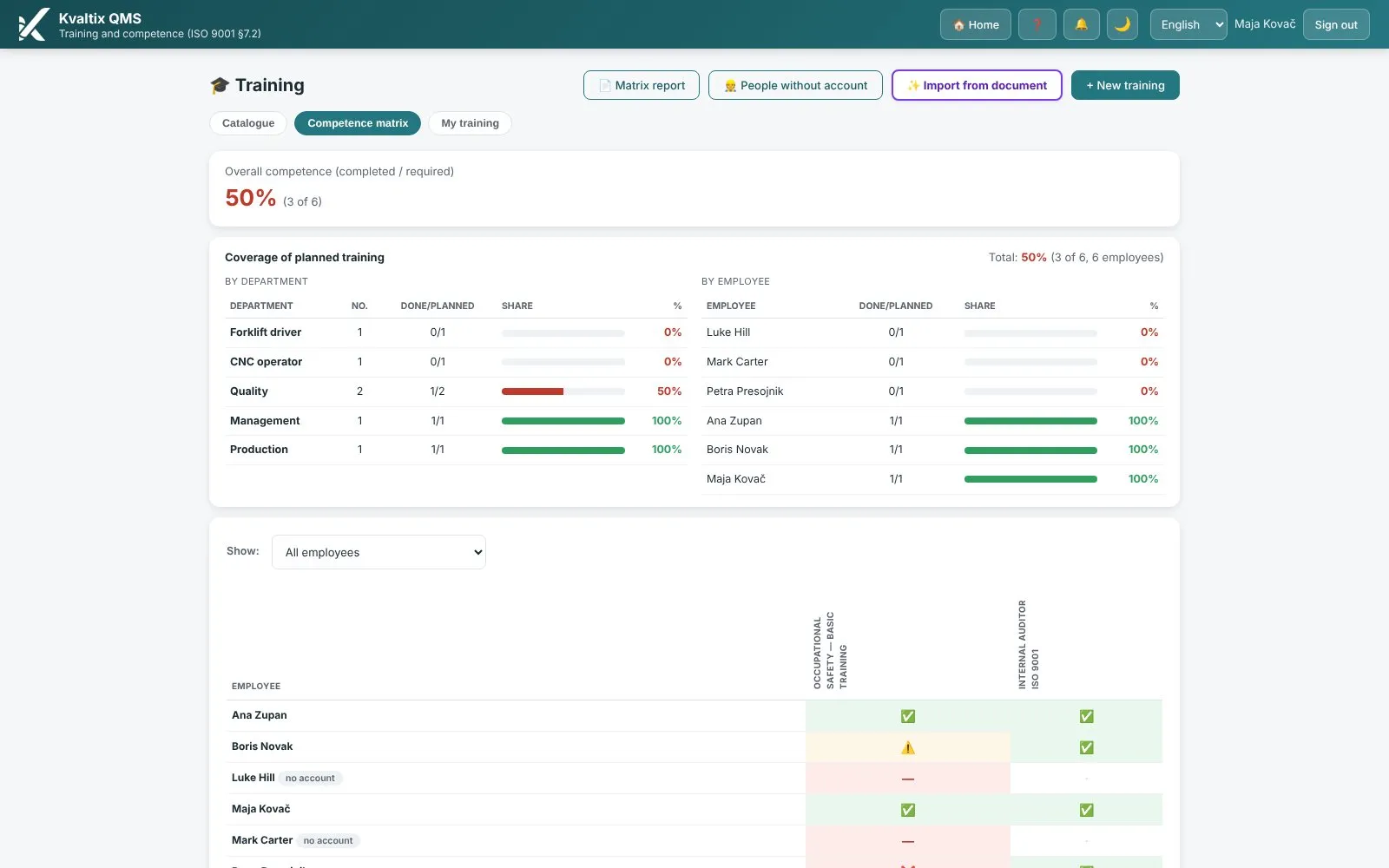
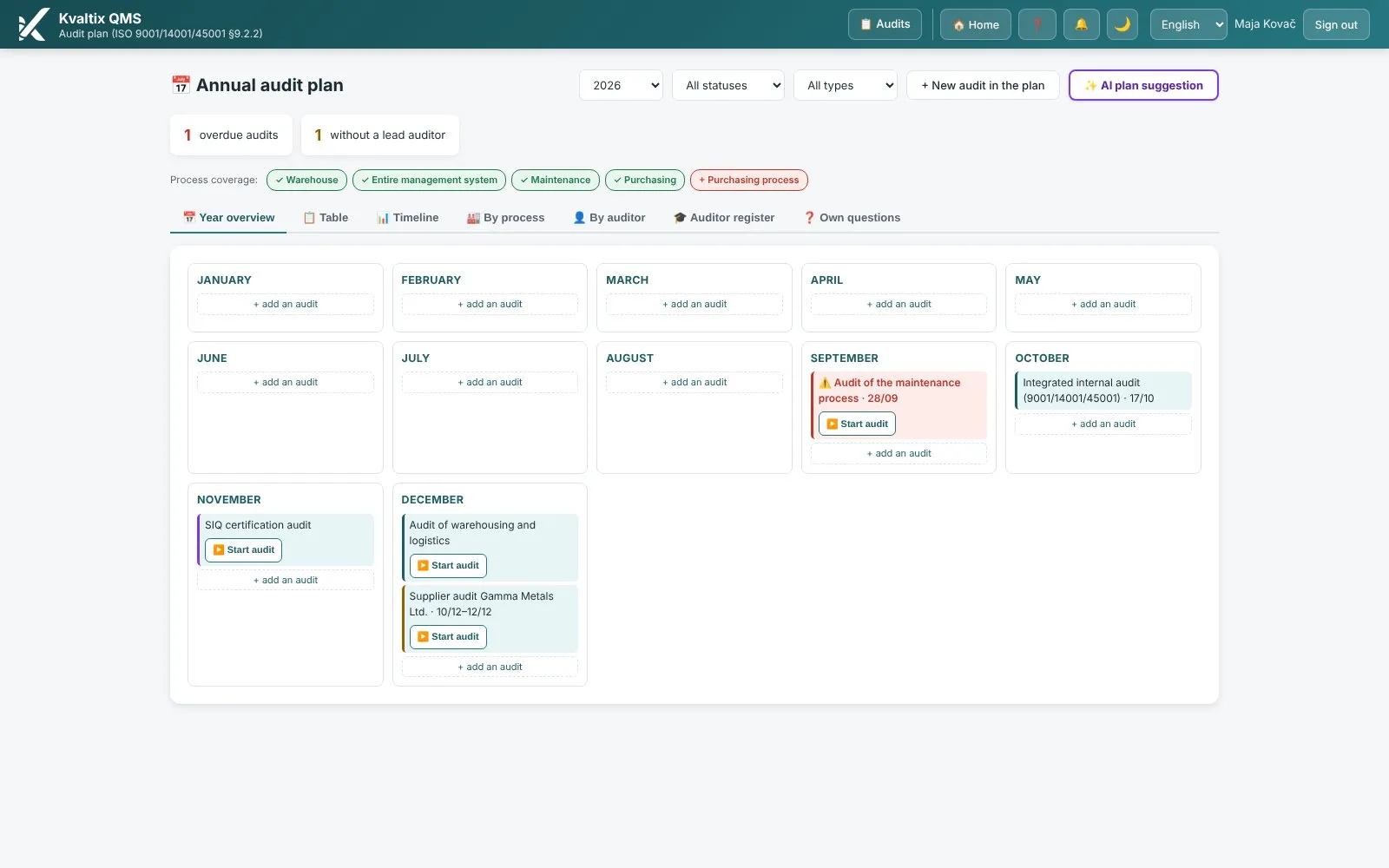
Modules in daily use
The modules this scenario uses; each links to its page with a video and screens.
Effects (described qualitatively)
- One valid versionEmployees work from the approved document; acknowledgement is recorded per person instead of on a signature sheet.
- Deadlines speak upCalibrations, training and action deadlines appear in the Planner and send reminders before they pass.
- Actions are closed with proofEvery action has a criterion and an independent effectiveness check before it is closed.
- Audit preparation becomes routineEvidence is collected as work is done; the audit report, the document history and the registers are exported as PDFs.
- Management sees the statusThe management review gets its inputs from the modules instead of from collected spreadsheets.